Welcome back to the new term. We hope you had a restful break and are looking forward to the months ahead. This bulletin brings together key safeguarding updates, training opportunities and resources to support your safeguarding practice throughout the term.
In this edition, you'll find information about Breck Foundation online safety sessions, First Response referral training, the Stay Safe, Stay Aware Year 6 Conference, and a new critical incident response training programme for senior leaders. We've also included other updates to help settings continue to promote the safety, wellbeing and resilience of children and young people.
The government has accepted all recommendations from the Independent Review of Antisemitism in Schools and Colleges. The recommendations include:
On the 22 October, the DfE published Understanding and preventing serious violence in education, covering prevention, incident response, post-incident support and information sharing. The DfE explicitly says it introduces no new expectations: it consolidates existing duties and evidence-informed recommendations.
The guidance clarifies that:
Off-site and online-related violence should follow the same safeguarding pathways as on-site incidents.
Every child connected to an incident—including witnesses and those displaying harmful behaviour—may require support.
Schools are not specified authorities under the serious-violence duty, but must collaborate if requested, may request participation, and must be consulted on local strategies.
Evidence-informed prevention favours inclusion, trusted adults and targeted support; fear-based or prison-awareness interventions may be harmful.
Why it matters for DSLs
It provides a strong basis for aligning safeguarding, behaviour, attendance, RSHE, emergency planning and contextual-safeguarding work. It also corrects any assumption that schools have no formal role in serious-violence partnerships.
Understanding and Preventing Serious Violence in Education
The Department for Education has updated its information sharing guidance for practitioners working with children, young people and families. The revised guidance provides greater clarity on when information can and should be shared to safeguard children, including the role of consent, lawful information sharing and the importance of timely decision-making.
Settings should take this opportunity to review their policies to ensure they reflect the latest guidance and local safeguarding arrangements. The updated guidance reinforces that concerns about a child's safety and welfare should not be delayed by uncertainty about information sharing.
Important: If your setting uses the Bristol City Council Child Protection and Safeguarding Policy Template, you should review and update the information sharing section locally. The current template was published before the revised guidance and may require amendment to reflect the latest expectations.

Action for schools and settings
The Department for Education has published updated guidance, The Prevent Duty: Safeguarding Learners Susceptible to Radicalisation, designed to make the guidance more practical, accessible and easier for education settings to use.
The revised guidance has been:
Improved case studies
The case studies have also been significantly improved to provide greater practical support for practitioners:
Why this matters for DSLs
The updated guidance aims to support Designated Safeguarding Leads and safeguarding practitioners to identify, assess and respond to concerns about vulnerability to radicalisation more effectively, while promoting consistent practice across education settings.
The Prevent Duty: Safeguarding Learners Susceptible to Radicalisation (GOV.UK)
Domestic Homicide Reviews (DHRs) have been renamed Domestic Abuse Related Death Reviews (DARDRs).
The statutory definition now reflects the wider range of domestic abuse related deaths. DARDRs may now include:
Domestic Abuse Act 2021 definition embedded throughout the guidance.
The 2026 Guidance does not include deaths by a person living within the same household unless they were in an intimate relationship or familial member.
A DARDR needs to identify both a victim and a suspected perpetrator(s) of domestic abuse, or a contextual basis for domestic abuse, in order for a review to be commissioned.
Clarifies that the 2026 statutory guidance applies to reviews where the notification is received after 15th September 2026. Death notifications received before then or reviews already underway prior to this date, may continue to proceed under the 2016 guidance.
KBSP Domestic Abuse Related Death Reviews (DARDRs)
As winter approaches and ahead of the new term, please share the following health protection information with staff, parents and carers through your newsletters, bulletins and other communications as appropriate.
Winter Readiness Webinar
Monday 9 November 2026, 4:00pm to 5:30pm
Education settings and local authority colleagues are invited to attend a webinar on managing seasonal illness and preparing for severe weather impacts associated with El Niño.
Register: Winter Readiness Webinar Tickets, Monday, November 9 • 4 PM - 5:30 PM GMT | Eventbrite
UKHSA Advice and Support
For advice about infectious disease concerns in education settings, contact the UKHSA South West Health Protection Team:
📞 0300 303 8162
Useful resources
Flu Vaccination
Flu can cause serious illness in children and lead to hospital admissions each winter. Vaccination helps protect children and reduces transmission to others who may be more vulnerable.
Most children in Reception to Year 11 are offered their flu vaccine through school.
If a child misses their school vaccination or is home educated, parents/carers can arrange vaccination through a community clinic.
📞 School Immunisation Service: 0300 124 5515
For more information on the flu vaccine: Children's flu vaccine - NHS and Children’s flu vaccine - BNSSG Healthier Together
School Closures
Closing an education or early years setting due to illness outbreaks should be a last resort. Any closure on public health grounds should be discussed with the UKHSA and local authority public health colleagues through appropriate incident management arrangements.
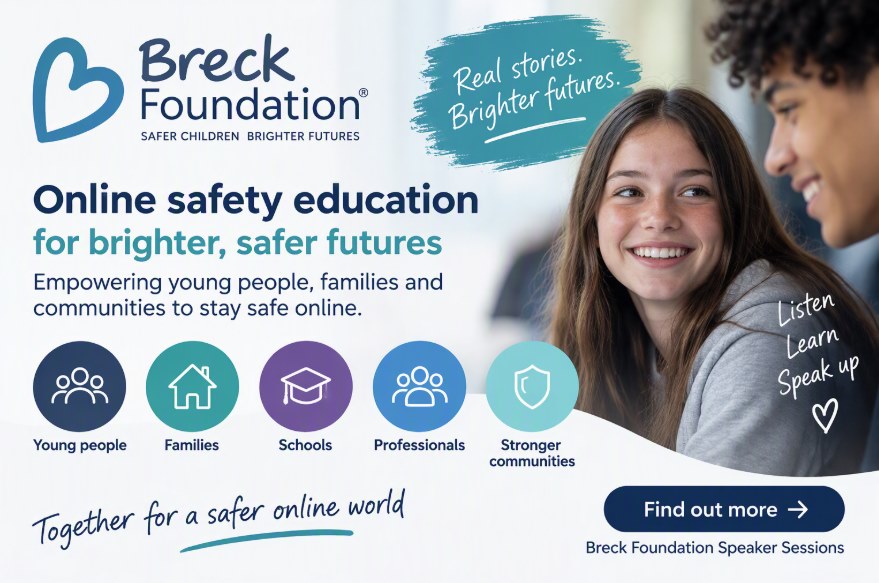
Breck Foundation delivers engaging online safety education for children, young people, families and professionals, using Breck’s Story to raise awareness of online grooming, exploitation and abuse.
Sessions help young people recognise online risks, stay safe when gaming and using social media, and know how to seek help. Additional topics include AI, misinformation, digital citizenship and online wellbeing.
Training and awareness sessions are also available for parents, carers and professionals.
Find out more:
Breck Foundation Speaker Sessions
First Response is offering bi-monthly training sessions on what makes a good referral. The sessions are aimed at:
The next session will take place 18 November 2026, 10:30am to 11:30am at City Hall.
To reserve a place on the next session, please email david.wiley@bristol.gov.uk.
Early booking is recommended due to limited capacity.
Future dates (2027): 19 January, 17 March, 18 May, 20 July, 21 September and 16 November
A huge thank you to the 30 schools that have already booked to attend our Stay Safe, Stay Aware: Year 6 Conference on Wednesday 9 December 2026, from 9:30am to 3:00pm at Bristol City Council, City Hall.
Developed in partnership with the Youth Council, the conference will help Year 6 pupils build confidence, recognise risks and learn how to stay safe as they prepare for the transition to secondary school.
The day will feature interactive workshops on:
Pupils will also have the opportunity to meet police officers and PCSOs, visit the Council Chamber, and put questions to senior leaders from across Bristol, including the Lord Mayor and representatives from the police and council.
Schools are invited to bring 2-3 Year 6 pupils and one member of staff. Additional places may be available on request.
Book your place
There are still spaces available. If your school would like to attend, please email to reserve your place as soon as possible. androulla.nicolaou@avonandsomerset.police.uk
We look forward to welcoming pupils to what promises to be an engaging, informative and memorable day.
Do you work with families who need support understanding the education system, communicating with schools, or navigating school-related concerns?
Bristol City of Sanctuary's Education Champions offer drop-in sessions for parents and carers, providing practical support and advocacy for families, particularly those who may be new to the UK education system or whose first language is not English.
When? Tuesdays, 10:30am-12:00pm Fridays, 10:30am-12:00pm
Where? Easton Christian Family Centre (ECFC), Beaufort Street, Easton, BS5 0SQ
Support available: Understanding the UK school system Communicating with schools Discussing school-related concerns Multilingual advice and guidance
Contact for further information: iman@bristol.cityofsanctuary.org and arwa@bristol.cityofsanctuary.org
A huge thank you to all Designated Safeguarding Leads and setting leaders who contributed to the completion of the 2024-2026 Section 175 Safeguarding Audit. Your time, reflection and commitment to evaluating safeguarding practice are greatly appreciated.
The audit continues to provide valuable assurance about safeguarding arrangements across Bristol's education settings, while helping settings identify strengths, areas for development and priorities for improvement.
Audit Reports Available
Individual audit reports have now been uploaded to your setting's SharePoint folder. We encourage DSLs and senior leaders to review the findings and consider any actions that may support ongoing safeguarding development and assurance.
New Audit Cycle: 2026-2028
We are pleased to confirm that the updated 2026-2028 Safeguarding Audit will be launched in November 2026.
The revised audit will continue to reflect statutory safeguarding requirements and emerging safeguarding priorities, supporting settings to demonstrate effective safeguarding practice and governance.
Submission deadline for the 2026-2028 audit: 31 July 2028
We will share further information, guidance and support materials when the new audit is published.

Face to Face Training
17 and 18 November 2026, 08:45–16:30
23 and 24 March 2027, 08:45–16:30
Virtual
26 to 29 January 2027, 08:45–12:30
Face to Face Training
Virtual
24 and 25 November 2026, 08:45–12:30
19 and 20 January 2027, 08:45–12:30
2 and 3 March 2027, 08:45–12:30
11 and 12 May 2027, 08:45–12:30
6 and 7 July 2027, 08:45–12:30
Wednesday 4 November 2026, 09:30–11:30
Wednesday 17 March 2027, 09:30–11:30
Wednesday 2 June 2027, 09:30–11:30
02/02/2027 - South
03/02/2027 - Virtual
03/02/2027 - East / Central
04/02/2027 - North
11/02/2027 - Post 16
The Educational Psychology Service and Safeguarding in Education Team are offering a one-day training course to help senior leaders prepare for and respond effectively to critical incidents. The training will support settings to review or develop their critical incident plans using research, evidence and practical learning.
Date: Tuesday 26 January 2027
Time: 8:30am to 3:30pm
Venue: The Park Centre, Daventry Road, Bristol, BS4 1DQ
Cost: £35 per delegate
The training includes:
This course is aimed at senior leaders in education settings. Schools and settings are encouraged to send two members of staff, such as Headteachers, Deputies, DSLs or Business Managers, to support planning within their own context.
Responding to Critical Incidents: Training for Senior Leaders
To find out more or ask any questions, please email clare.sowman@bristol.gov.uk.
The training will enable participants to have both preventative and harm reduction conversations with young people about ketamine. To book your place, please contact karen@talkabouttrust.org
The Talk About Trust is extremely grateful to The Nisbet Trust for their support and funding. Please do contact us for details of all fully funded train the trainer training and resources to enable conversations about substances available to anyone working with 8 – 25-year-olds in Bristol. Contact karen@talkabouttrust.org.

The Safeguarding in Education Team has had a busy start to the academic year, providing advice and support to Designated Safeguarding Leads, delivering training, contributing to multi-agency safeguarding work, and supporting settings with a range of safeguarding challenges.
Our annual report to the KBSP has provided us with an opportunity to identify key assurance indicators, strategic safeguarding priorities, and priorities to develop for 2026-2027 to support education settings. We look forward to sharing these initiatives through networks and future training and events.
Contact the Team
The Safeguarding in Education Team is available to provide safeguarding advice, support and challenge to education settings across Bristol. 📧 safeguardingineducation@bristol.gov.uk 📞 0117 9222532
For enquiries relating to safeguarding training, policy updates, DSL support, Audits, critical incidents or safeguarding practice, please get in touch.
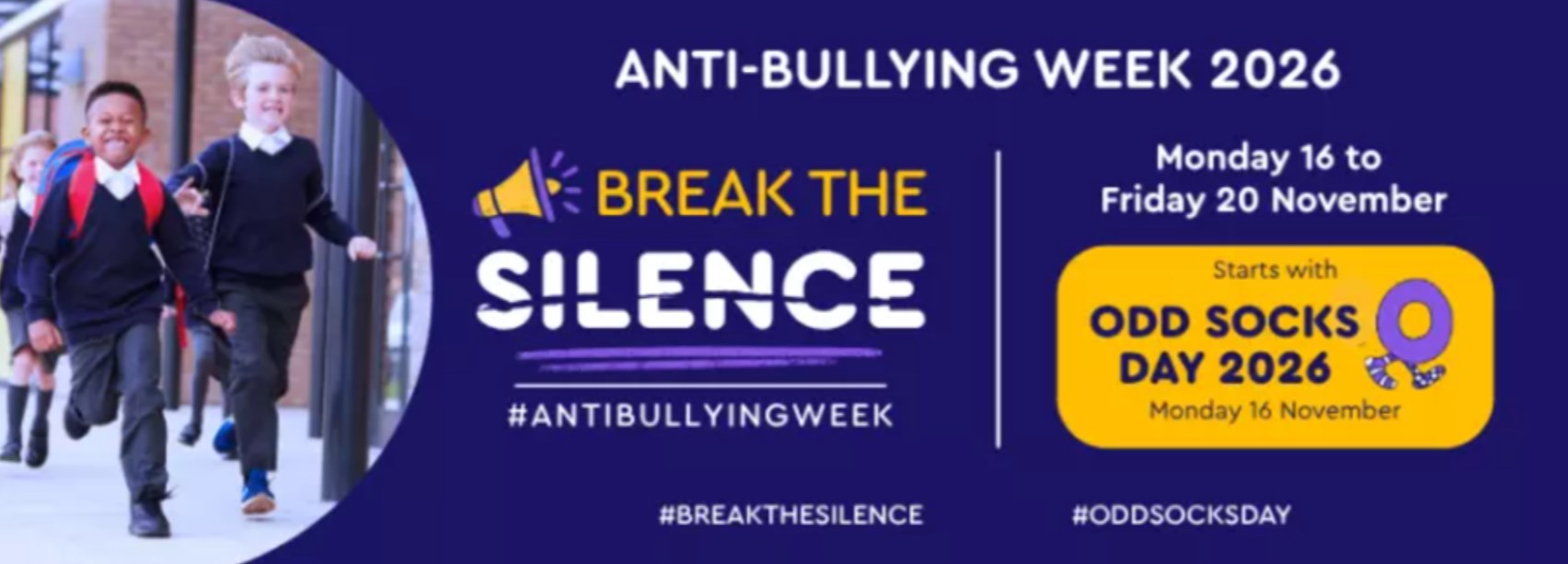
Anti-Bullying Week 2026 takes place 16-20 November with the theme "Break the Silence".
A great opportunity to encourage children and young people to start conversations about bullying, speak up, listen and take action together.
We look forward to continuing to work in partnership with you throughout the year and sharing learning, resources and updates to support effective safeguarding across Bristol's education community.